App marketing is crowded, and simply driving installs is no longer enough. Brands need users who understand the app’s value, trust the message, and are more likely to keep using the product after downloading it. Podcast advertising helps because it reaches people in a more focused and personal setting, often through hosts they already trust. When an app is promoted on the right podcast with a clear, relatable message, it can feel less like an ad and more like a useful recommendation. This makes podcasts a strong channel for building awareness, driving quality installs, and encouraging long-term app engagement.
What’s New in Podcast Advertising Strategies for Apps?
Podcast advertising for apps is no longer just a “brand awareness” experiment. It has become a more mature, measurable, and performance-focused channel for app marketers who want quality users rather than quick, low-value installs. The shift is easy to understand if you look at how people actually listen. A podcast ad often reaches someone while they are commuting, walking, cooking, working out, or doing quiet desk work. That listener may not download the app instantly, but if the message is clear and relevant, they may remember it later when the problem comes up again.
The channel is also attracting more serious advertising spend. IAB/PwC reported that podcast advertising revenue grew 26.4% year over year in 2024, a sharp acceleration after slower growth the previous year. Earlier IAB research also projected podcasting to pass $2 billion in revenue and continue growing toward $2.6 billion by 2026, helped by programmatic buying, video, and newer monetisation formats. For app brands, the message is clear: podcast advertising is becoming more sophisticated, and the brands that treat it strategically will get more from it.

More Focus on Quality Users, Not Just Downloads
One of the biggest changes in podcast advertising strategies for apps is the move away from judging success only by installs. App marketers have learned the hard way that a cheap install does not always mean a valuable user. Someone may download an app, open it once, and never return. That looks fine in a surface-level report, but it does not build real growth.
Today, stronger app campaigns measure what happens after the install. Did the user complete onboarding? Did they start a free trial? Did they subscribe, make a purchase, connect an account, or come back after seven days? These signals matter more than download volume alone. A finance app, for example, may prefer fewer installs if those users actually link their bank account and build a savings habit. A fitness app may care more about completed workouts than initial downloads.
Podcast advertising is well-suited to this quality-first approach because the listener often hears more context before taking action. A host can explain why the app matters, who it is for, and how it fits into daily life. That means users may arrive with a better understanding of the product. In real terms, this can lead to stronger activation and retention, even if the cost per install looks higher than a basic performance ad.
Growth of Video Podcasts
Video podcasts are changing how app brands think about podcast advertising. For years, podcast ads were mostly audio-based, which meant marketers had to explain the product entirely through voice. That still works, but video podcasts add another layer: the ability to show the app in use. For apps with visual interfaces, this can be a serious advantage.
Think about a budgeting app. In an audio ad, the host can describe how the app helps users track spending. In a video podcast, the host can briefly show the dashboard, point to spending categories, or demonstrate how quickly someone can set a savings goal. A language-learning app can show a lesson screen. A meditation app can display a calming interface. A project management app can show how tasks move through a workflow.
YouTube’s growing role in podcast consumption has made this shift even more important. The Verge reported in 2025 that YouTube launched a weekly U.S. podcast chart based on watch time, reflecting how strongly podcasts have moved into video-led discovery and viewing habits. For app advertisers, this means podcast creative can no longer be planned as audio only. A good strategy may need both: a strong host-read message for listeners and a simple visual demonstration for viewers.
Better Targeting and Dynamic Ad Insertion
Another major development is the rise of more flexible ad delivery. In older podcast advertising, a sponsorship was often baked into an episode permanently. That could be useful for long-term brand exposure, but it was not always ideal for app campaigns that needed fresh offers, location-specific messages, or seasonal timing.
Dynamic ad insertion has changed that. It allows advertisers to serve ads into podcast episodes based on factors such as timing, audience, location, and campaign needs. IAB’s earlier podcast revenue research noted that dynamic ad insertion represented more than 90% of podcast ad revenue, showing how central it has become to the industry’s buying model.
For apps, this opens up practical opportunities. A food delivery app can focus on cities where service quality is strongest. A tax app can run heavier messaging during filing season. A fitness app can promote New Year routines in January, outdoor training in spring, and habit recovery after holidays. Instead of treating every listener the same, app brands can make podcast ads feel more timely and relevant.
Podcast Ads Are Becoming Part of Full-Funnel App Marketing
Performance podcast advertising is no longer only a top-of-funnel tool. More app marketers are using podcasts across the full customer journey: awareness, consideration, install, trial, subscription, reactivation, and feature adoption. This is a more realistic way to think about app growth because people rarely become loyal users after one touchpoint.
For example, a language-learning app might first use podcast ads to introduce the brand to people interested in travel or career growth. Later, the same brand could run a campaign around “learn basic phrases before your summer trip.” After that, it might promote a premium plan, conversation practice feature, or family subscription. Each message serves a different stage of the funnel.
This full-funnel thinking also helps teams avoid one of the classic mistakes in app marketing: asking too much too soon. A first-time listener may not be ready to subscribe immediately, but they may download a free version, try a starter lesson, or visit a podcast-specific landing page. Over time, podcast ads can build familiarity and make the app feel like a credible choice when the user is ready.

Stronger Need for Creative Refreshes
As more advertisers enter podcasting, listeners are hearing more sponsor messages. That means creative fatigue is becoming a real issue. A host-read ad may feel natural the first few times, but if the same talking points run for weeks without change, loyal listeners may start tuning it out. App brands cannot afford to treat one script as a long-term solution.
Good podcast creative now needs regular refreshes. This does not always mean rewriting the entire campaign. Sometimes it means changing the opening hook, updating the example, rotating the offer, or giving the host a new story to tell. A wellness app might shift from “reduce daily stress” to “sleep better during a busy work week.” A budgeting app might move from “track spending” to “prepare for holiday expenses” or “save for a big purchase.”
IAB’s podcast creative guidance highlights the value podcasters can create for advertisers because of their influence with audiences, but that influence works best when the ad feels fresh, relevant, and aligned with the show’s tone. App marketers should listen to their own ads in context. If the message starts to sound repetitive to the team, regular listeners may already feel it.
More Emphasis on Trust and Authenticity
Even with better targeting, video formats, and measurement tools, podcast advertising still works because of trust. Listeners often feel a personal connection with hosts, especially when they have spent months or years listening to the same voices. That relationship cannot be replaced by clever targeting alone.
Spotify’s podcast advertising guidance points out that host-read ads help brands appear alongside trusted podcast voices and benefit from the credibility hosts have built with their audiences. This is especially important for apps that ask users to make a personal decision, such as managing money, improving health, building habits, learning skills, or organising work.
For example, a mental wellness app should not sound like a generic performance ad. It needs a careful, human message that respects the listener’s situation. A productivity app should avoid vague promises and instead speak to the daily reality of missed deadlines, scattered notes, or too many meetings. The more authentic the message feels, the more likely listeners are to give the app a chance.
Overall, what is new in podcast advertising strategies for apps is not just better technology. It is a more thoughtful approach. App marketers are learning to combine trusted voices, sharper targeting, stronger creative, video opportunities, full-funnel planning, and better post-install measurement. The brands that do this well will not simply buy attention. They will earn it, and that is what turns podcast listeners into users who actually stay.
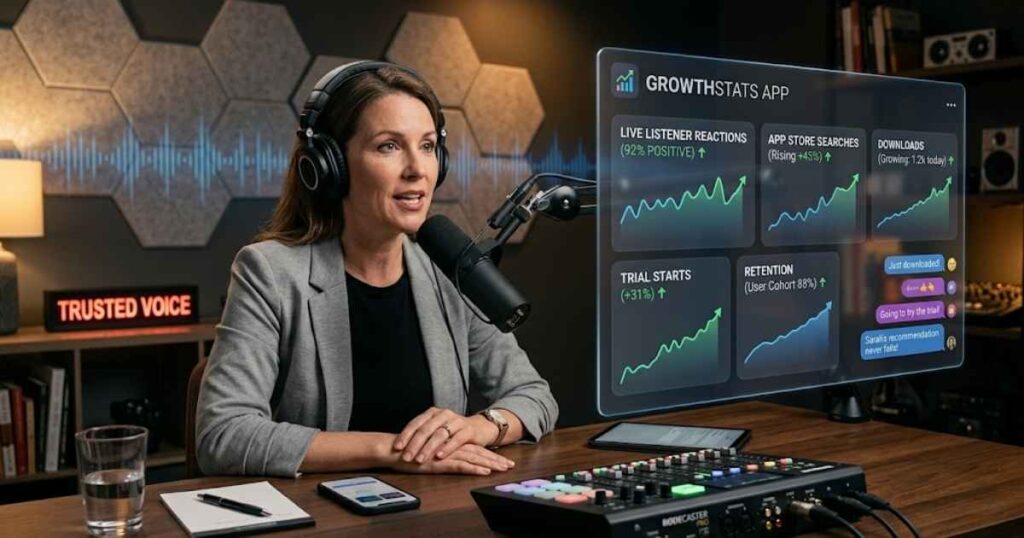
How Lumen Used Podcast Advertising to Scale App Growth?
A strong real-world example is Lumen, a health-tech brand with an app-connected metabolism tracker. Lumen’s product needed more explanation than a typical app because users first had to understand breath-based metabolism tracking and why it mattered for nutrition, fitness, and weight management. Instead of jumping straight into broad podcast buys, Lumen started with high-intent health and fitness audiences, then expanded into larger podcast networks once it found shows that could explain the product clearly and drive profitable conversions.
According to ADOPTER Media’s case study, podcast advertising became Lumen’s number one growth channel in both scale and ROI, with ad spend growing 10x in nine months while keeping customer acquisition costs within target benchmarks. The campaign worked because Lumen tested carefully, used trusted podcast voices to educate listeners, cut underperforming placements quickly, and scaled only the shows and networks that delivered real results.
For app marketers, the lesson is simple: podcast ads work best when they are not treated as generic awareness placements, but as a measurable channel built around audience intent, clear education, and disciplined optimisation.
Conclusion
Podcast advertising can be a powerful channel for app growth when it is built around real listener behaviour, not just media buying. The best campaigns choose podcasts where the audience already has a reason to care, use trusted host voices, and focus on practical problems the app can solve. Instead of chasing installs alone, app marketers should look at user quality, engagement, retention, and long-term value.
With the right planning and execution, platforms like EASI Ads can help brands connect podcast campaigns with more meaningful app growth outcomes. When the message feels relevant, and the next step is clear, podcast ads can do more than create awareness. They can help the right users understand, download, and continue using an app with genuine interest.
FAQs: Podcast Advertising Strategies for Apps
Is podcast advertising effective for app growth?
Yes, podcast advertising can help apps grow when the show, audience, and message are well-matched. It works especially well because listeners often trust the host and pay closer attention than they would to many other ad formats. For apps, the goal should be quality installs, not just more downloads.
What type of podcast ad works best for apps?
Host-read ads usually work best for apps that need trust or explanation. When a host explains the app in their own voice, the message feels more natural and credible. This is useful for finance, wellness, education, fitness, and productivity apps.
How should app brands choose the right podcasts?
App brands should choose podcasts based on listener intent, not just audience size. A smaller niche podcast can perform better if the audience already cares about the problem your app solves. For example, a budgeting app may fit finance shows, but also parenting podcasts where money planning is a daily concern.
How can apps measure podcast advertising performance?
Apps should measure more than installs alone. Useful signals include promo code use, landing page visits, branded search lift, app store searches, trial starts, subscriptions, and retention. Podcast ads often influence users before they download, so a wider measurement view gives a fairer picture.
What should a podcast ad for an app include?
A strong podcast ad should clearly explain the problem, show how the app helps, and give listeners an easy next step. It should sound practical and relatable, not like a feature list. A dedicated landing page or simple listener offer can make the response easier to track.
How often should podcast ad creative be refreshed?
Podcast ad creative should be refreshed regularly so listeners do not tune it out. The same message can become repetitive if it runs for too long. App brands can update examples, seasonal angles, offers, or host talking points to keep the campaign fresh.