There are really two ways to buy a podcast ad, and they feel almost like opposite philosophies. One is personal and handcrafted. The other is automated and scaled. With host-read ads, you’re paying for a trusted voice and the relationship that host has spent years building with their audience. With programmatic ads, you’re paying for technology that can drop your pre-recorded spot across hundreds of shows and target exactly who hears it.
Most brands treat this as a host-read vs programmatic podcast ads, one or the other. But that’s usually the wrong question. So let’s break down how each actually works, what each costs, and when to reach for one, the other, or honestly, both.
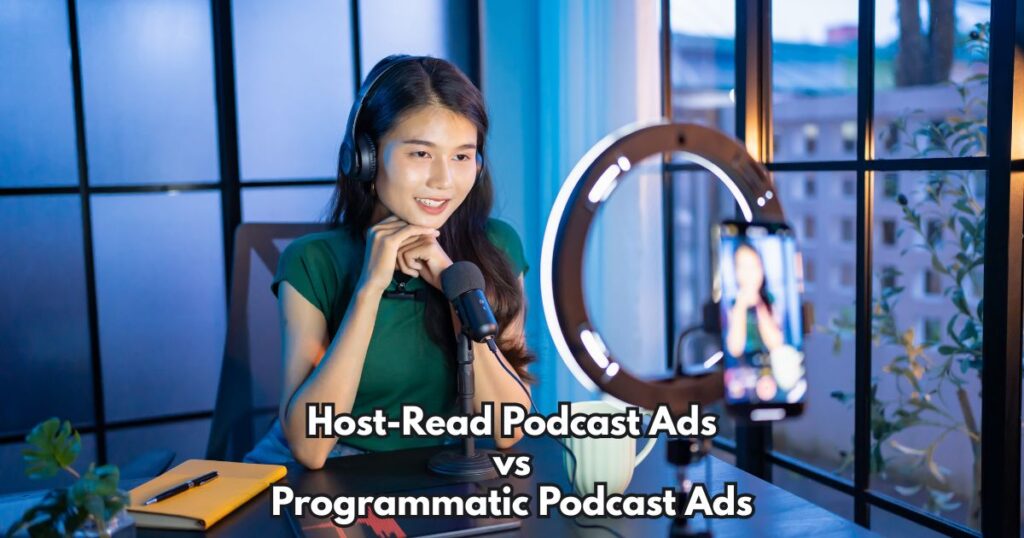
Host-Read Ads and Programmatic Podcast Ads Explained
The two formats differ at every stage, in how they’re made, bought, delivered, and experienced by the listener. Understanding that is the whole foundation for choosing well.
How Host-Read Podcast Ads Work?
A host-read podcast ad is exactly what it sounds like. The podcast host delivers your message in their own voice, right there in the episode. Sometimes it’s a genuine personal endorsement, the host sharing that they actually use and like your product. Sometimes it’s a scripted sponsorship, where you provide the key points and the host reads them in their natural style.
Either way, the value comes from the voice. Listeners have followed this host for months or years, so when that familiar person talks about your brand, it lands like a recommendation from someone they trust rather than an ad. Around two-thirds of listeners trust host recommendations, and studies show people remember host-read ads far better than pre-produced ones. You’re not just buying a slot. You’re borrowing a relationship.
How Programmatic Podcast Ads Work?
Programmatic ads flip the model. Here, you record your ad once, and automated technology places it across podcast inventory for you, no host involvement, no per-show negotiation. The system inserts your pre-recorded spot into episodes and targets who hears it based on things like audience data, location, device, or the context of the show.
This is buying at scale and with precision. Instead of hand-picking one podcast, you set your targeting and budget, and the technology distributes your ad across many relevant shows at once, reaching the right listeners wherever they are. The large majority of audio ad inventory now moves this way, which tells you how much the industry has embraced it. It trades the personal touch for reach and control.
Host-Read vs Programmatic Podcast Ads: Which Should You Choose?
So which one fits your podcast campaign? It comes down to what you actually need. If your goal is deep trust and conversions from a specific, loyal audience, host-read usually wins, because that personal endorsement does the persuading. If your goal is broad awareness or reaching a precise segment across many shows efficiently, programmatic tends to be the better tool.
Budget matters too. Host-read placements often carry higher costs and minimum commitments, so they suit brands ready to invest in a few high-value shows. Programmatic offers more flexibility for a range of budgets. Think about your buying stage as well, since trust-heavy host reads shine lower in the funnel while programmatic is great for building top-of-funnel reach.
And consider your creative and podcast measurement needs, because host reads are less controllable but more authentic, while programmatic gives you consistent creative and cleaner, impression-based data. There’s rarely a universally right answer, just a right answer for your specific goal.
A Hybrid Podcast Advertising Strategy
Here’s the thing most brands miss. These two formats aren’t rivals. They’re partners, and the smartest campaigns use both together, each doing the job it’s best at.
Use Host-Read Ads to Build Trust
Use host reads where trust is the goal. Place your personal endorsements on a small number of carefully chosen shows where the host and audience align tightly with your product. This is your credibility play, the trusted voice vouching for you to exactly the right listeners. You don’t need dozens of these. A few well-matched host reads plant deep trust with the people most likely to buy.
Use Programmatic Ads to Extend Reach
Then use programmatic to scale that presence. Expand the campaign across a wider set of relevant podcasts, markets, and listener groups, all with consistent creative and targeting. This is where you build the broad awareness and frequency that a handful of host reads can’t reach alone. The host reads earn the trust, and programmatic makes sure enough of the right people hear your name often enough to remember it. Together, they cover both depth and breadth.
Comparing the Cost of Each Podcast Ad Format
Cost is where the two formats really diverge, and several factors drive the difference. Both are influenced by audience size, show popularity, ad placement, targeting requirements, campaign duration, production costs, and any minimum spending commitments. But they weigh those factors very differently.
What Brands Pay for Host-Read Ads?
Host-read ads tend to cost more, and for good reasons. You’re paying for the host’s actual involvement and time, which is a real, limited resource. The inventory is scarce, since a show only has so many episodes and ad slots. And you’re buying access to a loyal, engaged audience that trusts the host’s word. Scarcity plus trust plus human effort adds up to a premium price, often with minimum commitments attached. You pay more, but you’re buying something genuinely hard to replicate.
What Influences Programmatic Ad Costs?
Programmatic pricing works on different logic and usually offers more flexibility. Because the buying is automated and priced by impressions, you can often start smaller and scale as you go. The inventory is far broader, spread across many shows rather than concentrated in one, which keeps costs more competitive. And real-time optimization means the system can shift your spend toward what’s performing, so your budget works harder. For brands that want control, flexibility, and efficient reach, the programmatic cost model is a lot more forgiving.
Real-World Campaign Scenario: Choosing the Right Format
Picture a software company launching a small business tool. It wants both credibility and reach, so it uses both formats deliberately.
For trust, it books host-read ads on a respected industry podcast whose audience is full of exactly the professionals it’s targeting. The host, someone those listeners genuinely rely on, explains the tool in their own words, and that endorsement carries real weight with a skeptical B2B crowd. At the same time, the company runs programmatic ads across a range of related business and tech shows, using consistent creative to build broad awareness among a wider pool of potential buyers.
And it uses programmatic to retarget too, staying in front of listeners who showed interest but didn’t act yet. The host reads win the trust, the programmatic wins the scale, and the retargeting closes the gap. One campaign, two formats, each doing what it does best.
Final Thoughts on Host-Read and Programmatic Podcast Ads
If you came here hoping for a clear winner, here’s the honest answer. There isn’t one. Neither host-read nor programmatic is automatically better, because they’re built for different jobs. One delivers deep trust from a specific audience. The other delivers broad, precise reach at scale.
So stop asking which format is best and start asking what your campaign actually needs. Deeper trust? Lean host-read. Broader scale or tighter targeting? Lean programmatic. Want the full effect? Combine them, using host reads to build credibility and programmatic to extend it everywhere. The brands that get the most from podcast advertising aren’t loyal to one format. They pick the right tool for the goal in front of them, and often, that means using both.
FAQs About Podcast Advertising Formats
Are host-read podcast ads more effective?
For trust and recall, usually yes. Host-read ads carry the host’s credibility, so listeners treat them more like a recommendation than an ad, and studies show they’re remembered better than pre-produced spots. That said, “more effective” depends on the goal, since programmatic can outperform host reads when you need broad reach or precise targeting rather than deep trust.
Are programmatic podcast ads cheaper?
Often, yes, or at least more flexible. Programmatic uses automated, impression-based pricing across a wide pool of inventory, so you can typically start with a smaller budget and scale up. Host-read ads cost more because you’re paying for the host’s involvement, limited inventory, and access to a loyal audience, frequently with minimum commitments.
Which podcast ad format is better for small businesses?
It depends on the goal, but many small businesses start with programmatic because of its flexibility and lower entry point, then add a host read on one perfectly matched niche show once they see traction. A single well-chosen host read on a highly relevant small podcast can also punch well above its weight for a limited budget.
Can host-read and programmatic ads be used together?
Absolutely, and it’s often the smartest approach. Use host reads on a few carefully selected shows to build trust with your core audience, and use programmatic ads to extend reach and frequency across many relevant podcasts. The two complement each other, covering both depth and scale in a single campaign.
How should brands measure podcast advertising ROI?
Use dedicated landing pages, unique promo codes, and pixel-based conversion tracking to tie results back to specific placements. Then watch branded search lift, direct traffic, and assisted conversions too, since podcast influence often shows up later rather than as an immediate click. Measuring the full picture, not just last-click, gives you an honest read on ROI.