A podcast ad has no image, no headline, and no flashing button to lean on. It has one job. Make someone pause, listen, and remember. The best podcast ads do not sound like a brand reading from a script. They sound like a useful thought dropped into the right moment. They understand what the listener is doing, what problem they may have, and why the message should matter now.
Podcast ad is what separates a skipped-over ad from one that sticks. To create podcast ads that work, brands need a sharp message, the right show, and a simple next step listeners can remember later.
How To Create Podcast Ads That People Actually Listen To?
Podcast ads work best when they do not feel like ads. That sounds simple, but most weak podcast ads fail because they forget the listening moment. Understanding what makes a perfect podcast ad can help brands balance audience relevance, natural creative, the right format, and a CTA listeners can actually remember. Someone may hear your message while driving to work, cooking dinner, walking the dog, or catching up on an industry show before their next meeting. They are listening, but they are not waiting for a brand to interrupt them.
That is why creating podcast ads takes more than writing a short script and booking media. The ad has to fit the show, the host, the audience, and the moment. Edison Research reported in 2025 that 73 percent of Americans age 12 and older have consumed a podcast, 55 percent consumed one in the last month, and 40 percent consumed one in the last week. The audience is there. The real challenge is making the message worth remembering.
Start With the Listener Before the Product
A common mistake is starting with the product features. Teams often want to mention everything the product can do, but podcast listeners rarely remember a long list. They remember a situation that feels familiar. A good podcast ad begins with the listener’s problem, not the company’s internal messaging.
For example, a project management tool should not open with a vague line about improving collaboration. A stronger opening would mention the real frustration of chasing approvals across email, Slack, and spreadsheets. That instantly gives the listener a picture. It sounds like a real workday, not a software brochure.
This is where good podcast advertising feels different from many other ad formats. You are not relying on visuals, captions, or buttons. The words have to create the scene. If the listener can quietly think, yes, that happens to me, the ad has already done more than most generic campaigns. One of the most important podcast advertising best practices is to start with a recognizable listener problem rather than trying to squeeze every product feature into the script.
Choose One Clear Goal for the Podcast Ad
Before writing the script, decide what the ad needs to achieve. Is the goal brand awareness, website traffic, app installs, demo bookings, free trials, or purchases. Each goal changes the creative direction. A brand awareness ad should be easy to remember. A performance ad needs a stronger offer and a clear action. Thinking about podcast ads across the marketing funnel can help brands decide whether a campaign should prioritize awareness, consideration, traffic, leads, or direct conversions.
Imagine a new meal kit brand advertising on a parenting podcast. The first goal may not be instant sales. It may be to connect the brand with easier weeknight dinners. On the other hand, a payroll software company advertising on a small business podcast may want demo requests from owners who are tired of payroll mistakes.
Trying to make one ad do everything usually makes it weaker. The message becomes crowded, the CTA becomes confusing, and the listener leaves with no clear reason to act. A podcast ad should have one main job. The cleaner that job is, the more confident the script will sound.
Pick the Right Podcast Ad Format
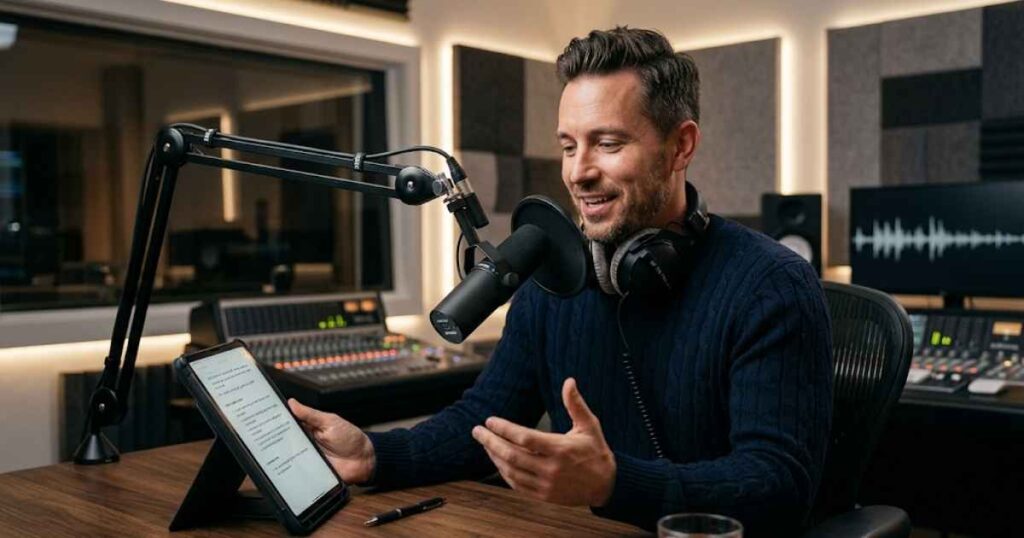
The two common podcast ad formats are host-read ads and pre-recorded ads. Host-read ads are delivered by the podcast host, often in their own voice. These work well when the product needs trust, explanation, or a personal touch. A financial planning tool, healthcare platform, B2B service, or education product may benefit from a host explaining why it matters.
Pre-recorded ads work better when a brand needs control, speed, and scale. A food delivery app promoting a weekend discount or a streaming platform promoting a new release may want one polished ad that can run across several shows. The message stays consistent, and the campaign is easier to manage. Understanding the different podcast ad formats makes it easier to decide whether host-read creative or a pre-recorded commercial is better suited to the campaign goal.
Cost can also affect the choice. Acast’s current guidance places many pre-recorded podcast ads around $15 to $30 CPM, while host-read sponsorships often sit around $25 to $40 CPM. The higher cost of host-read ads can be worth it when trust is the reason someone will listen. Actual podcast advertising costs depend on factors such as audience size, show niche, placement, targeting, campaign length, and whether the creative is host-read or pre-recorded.
Write Podcast Ad Scripts That Sound Spoken
A podcast ad script should be written for the ear. That means it needs rhythm, clarity, and natural language. If a sentence feels awkward when read aloud, it will probably sound awkward in the episode. Many ads fail because they are written like website copy, not like something a person would actually say.
Here is the difference. A stiff ad might say the platform enables workflow visibility across departments. A natural ad would say it helps your team see what is stuck, who owns it, and what needs to happen next. The second version is easier to understand because it sounds like a person explaining a problem at work.
The best scripts usually use simple words, specific examples, and one strong benefit. Say the brand name clearly. Explain the value quickly. Give the listener a reason to care. Then stop before the ad starts feeling overstuffed.
Use Real Examples That Match the Show
Podcast audiences are not just groups of people. They are communities with a shared mindset. A listener on a founder podcast is thinking differently from someone listening to a comedy show or a parenting podcast. The ad should respect that context.
For example, an accounting tool can use different examples for different shows. On a freelancer podcast, the ad could focus on unpaid invoices and tax season stress. On a startup podcast, it could focus on messy financial reports before an investor meeting. On a small business podcast, it could focus on payroll and cash flow.
Mailchimp’s sponsorship of Serial is still one of the most useful real world examples. Serial became the fastest podcast on iTunes to reach 5 million downloads and streams, and Mailchimp gained repeated exposure through a simple, memorable ad. The famous MailKimp mispronunciation became part of the culture around the show, proving that audio moments can travel far when they feel human and easy to recall.
Keep the CTA Easy to Remember
A podcast listener may not be able to click right away. They may be driving, cooking, exercising, or walking. That means the CTA has to be simple enough to remember later. A short vanity URL, clear promo code, or simple search instruction usually works better than a complicated link.
A weak CTA asks the listener to remember too much. A better CTA might say to search the brand name and use a short code for the offer. If the ad is for a meal kit, the landing page should talk about easy weeknight meals. If the ad is for reporting software, the page should show how teams save time on reports.
The handoff matters. When the promise in the ad and the landing page message match, the listener feels like they are in the right place. When they do not match, the campaign loses attention at the exact moment it needs action. A strong podcast advertising strategy should connect the ad, CTA, landing page, and follow-up experience so the listener receives one consistent message from first exposure to conversion.

Measure More Than Promo Codes
Promo codes are useful, but they do not show the full impact of podcast ads. Some listeners use the code. Others search the brand later, visit the website directly, or convert after hearing the ad several times. If you judge the campaign only by promo code usage, you may undercount the real influence. Effective podcast ad measurement therefore looks beyond promo-code redemptions and combines branded search, direct traffic, landing-page engagement, surveys, leads, and purchases.
A better podcast measurement plan includes vanity URL visits, branded search, direct traffic, landing page engagement, post-purchase surveys, demo requests, sales conversations, and lead quality. For B2B brands, a prospect saying they heard about the company on a podcast can be a valuable signal.
Podcast advertising revenue reached $2.9 billion in the U.S. in 2025, growing 17.6 percent year over year, according to IAB and PwC. Brands keep investing because podcast ads can build trust and recall in a way many interruptive formats struggle to match.
How Squarespace Used Podcast Ads to Reach the Right Audience?
Squarespace is a strong example of a brand that used podcast advertising as a long-term growth channel, not just a one-time campaign. The company started testing audio advertising early and became one of the most familiar sponsors across podcasts. According to AdExchanger, Squarespace’s podcast strategy began with a small marketing team of around 15 to 20 people and grew into a major part of its wider audio advertising budget.
What made the campaign work was consistency and audience fit. Squarespace did not only buy random podcast placements for reach. It worked with shows where listeners were likely to be creators, freelancers, entrepreneurs, writers, and small business owners. These were people who could actually need a simple website builder. The product matched the audience’s real life needs.
Squarespace also used podcast advertising in a practical way. The brand tested custom URLs and offer codes to connect podcast exposure with conversions. This matters because podcast ads are not always measured through one clean click. Some listeners hear the ad, remember the brand, and visit later. By using trackable offers, Squarespace made the campaign easier to evaluate while still benefiting from long-term brand recall.
The lesson for brands is clear. A podcast ad does not always need to be loud or overly clever. It needs to show up in the right shows, speak to the right audience, and give listeners an easy next step. Squarespace became memorable in podcasting because it stayed consistent, chose relevant audiences, and treated podcast advertising as a serious channel rather than a small experiment.
Final Thought
The best podcast ads do not try to sound clever for the sake of it. They sound useful, relevant, and easy to remember. They respect the relationship between the host and the listener instead of forcing a hard sell into the episode.
When you create podcast ads with the listener in mind, the message becomes sharper. The examples feel more real. The CTA becomes easier to act on. That is when podcast advertising stops feeling like rented attention and starts becoming a practical way to build trust, recall, and demand.
FAQs About Creating Podcast Ads
How long should a podcast ad be?
Most podcast ads are 30 to 60 seconds long. A 30-second ad works well when the offer is simple, such as a discount, free trial, or app download. A 60-second ad is better when the product needs more explanation, storytelling, or a host’s personal example.
How much does it cost to create and run podcast ads?
Podcast ads are usually priced by CPM, which means cost per 1,000 impressions. Pre-recorded ads often cost around $15 to $30 CPM, while host-read ads often cost around $25 to $40 CPM. The final cost depends on the podcast’s audience size, niche, ad placement, targeting, and campaign length.
What makes a podcast ad effective?
An effective podcast ad speaks to one clear listener problem and explains the benefit in simple language. It should sound natural, not overly scripted. The best ads usually fit the tone of the podcast, mention the brand clearly, and give listeners one easy action to remember.
Are host-read podcast ads better than pre-recorded ads?
Host-read ads are often better when the product needs trust, explanation, or credibility from the host. Pre-recorded ads are better when the brand needs full control, consistent messaging, and scale across many shows. The best choice depends on the campaign goal and product type.
How do you measure podcast ad performance?
Podcast ad performance should be measured using more than promo codes. Brands can track vanity URLs, branded search, direct traffic, landing page visits, demo requests, purchases, surveys, and sales team feedback. These signals together give a clearer view of how the ad influenced listeners.