Podcast advertising works because it reaches people in a rare moment of real attention. That is why understanding how to promote your business on podcasts starts with respecting the way people actually listen. Listeners are not casually scrolling past a sponsored post or half-reading a banner ad; they are usually driving, walking, cooking, exercising, or doing routine work while a trusted host speaks directly to them.
That makes podcasts feel more personal than many other marketing channels, but it also means the message has to earn its place. A generic sales pitch can feel awkward quickly, while a relevant, host-led recommendation can build trust, spark interest, and make your business easier to remember when the listener is ready to buy.
How to Promote Your Business on Podcasts and Turn Listeners Into Customers?
Podcast advertising ROI works because it reaches people in a rare moment of attention. Listeners are not half-reading a banner ad or scrolling past a sponsored post. They are usually driving, walking, cooking, working out, or doing something routine while a trusted host speaks directly into their ears. That creates a different kind of advertising environment: calmer, more personal, and often more believable.
But that trust can be lost quickly. A podcast ad that sounds like a generic sales pitch will feel out of place. A good podcast ad feels like it belongs in the episode. It understands the listener, respects the host’s voice, and gives people a clear reason to care.
Start With Podcast Listener Intent, Not Just Your Product
The best podcast campaigns begin with the listener’s mindset. What are they thinking about when they hear your ad? What problem are they already trying to solve? A productivity tool on a founder podcast speaks to someone dealing with team chaos, missed deadlines, and messy handovers. A meal kit on a parenting podcast speaks to someone who may be tired of deciding what to cook every night.
This is why audience fit matters more than broad reach. A large show can create awareness, but a smaller niche podcast may create better customers if the audience already cares about the problem your business solves. Good podcast promotion starts by matching your product to the listener’s real-life context.
Choose Podcasts Where Your Brand Feels Natural
Do not choose a podcast only because it has impressive download numbers. Listen to the show first. Notice how the host talks, what the audience values, and how ads are usually delivered. Some shows have highly loyal audiences, while others may have scale but weaker sponsor engagement.
For example, a bookkeeping service for freelancers may perform better on a small creator-business podcast than on a huge general business show. The audience is closer to the pain point: invoices, tax stress, irregular income, and confusing expenses. When the problem is already present in the listener’s life, the ad does not need to work as hard.
Use Host-Read Podcast Ads to Build Trust
Host-read podcast ads are powerful because they borrow credibility from the host-listener relationship. A host saying, “I use this because it solved a problem I actually had,” feels very different from a polished brand voice saying, “Our solution is trusted by professionals.”
Give the host a strong brief, not a stiff script. Include the product benefit, the customer problem, the offer, the landing page, and any required claims. Then let the host explain it naturally. The more the ad sounds like the host’s normal speech, the more likely it is to hold attention.

Turn Product Features Into Memorable Stories
People rarely remember feature lists. They remember situations. Instead of saying your software “improves collaboration,” describe the Monday meeting where nobody knows who owns the next task. Instead of saying your meal kit is “convenient,” describe the relief of opening the fridge after work and already having dinner planned.
Strong podcast ads often use small, recognisable moments:
- A founder chasing unpaid invoices on Friday afternoon
- A parent staring into the fridge with no dinner plan
- A manager losing tasks across Slack, email, and spreadsheets
- A pet owner worrying about an unexpected vet bill
These examples make the ad feel useful instead of promotional.
Keep the Podcast Ad Call-to-Action Easy to Remember
Podcast listeners are often away from a screen, so your next step must be simple. Avoid long URLs, complicated offers, or multiple instructions. Use a short landing page, a clear promo code, and one main action.
A good call-to-action might be: “Visit BrandName.com/podcast and use code SARAH for 20% off.” For a service business, it might be: “Book a free 15-minute consultation at BrandName.com/start.” The easier it is to remember, the better chance the listener will act later.
Test Podcast Ads Before Scaling Your Budget
One podcast placement is rarely enough to judge performance. Listeners may hear episodes days or weeks after release, and many need repeated exposure before buying. Start by testing different show types, host styles, messages, and ad positions.
A wellness brand might test a health podcast, a productivity podcast, and a lifestyle show. A B2B company might test founder podcasts, operations shows, and niche industry podcasts. The goal is not just to find the cheapest conversion. It is to find the audience and message combination that creates real customer interest.
Measure Podcast Advertising Beyond Promo Codes
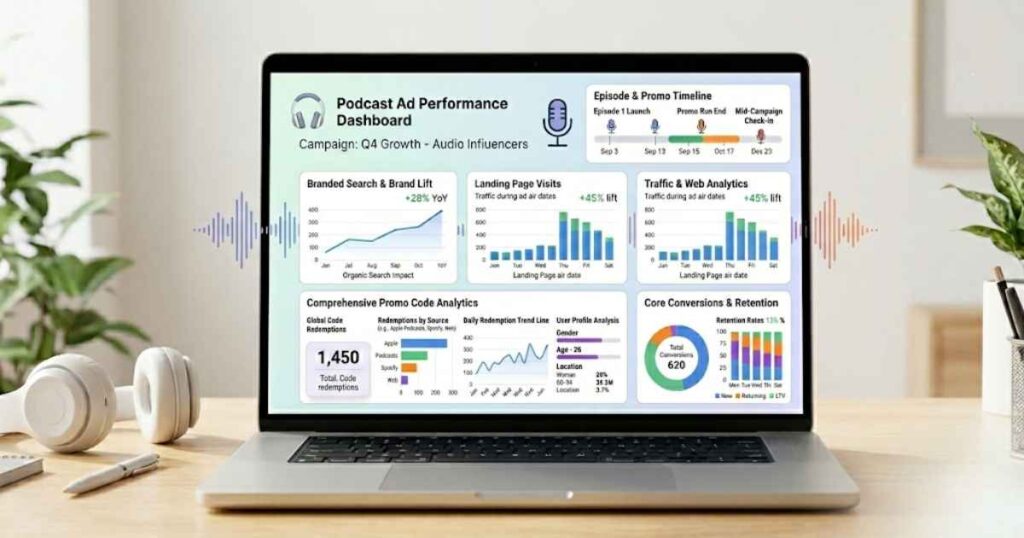
Promo codes and vanity URLs help, but they do not show the full value of performance podcast advertising. A listener may hear your ad, search your brand later, read reviews, visit from another device, and buy after several days. If you only count code usage, you may miss the bigger impact.
Track a mix of signals: landing page visits, branded search lift, direct traffic, post-purchase surveys, lead quality, repeat purchases, and subscription retention. For service businesses, booked calls and closed deals matter more than clicks. For e-commerce brands, customer quality may matter more than the first purchase alone.
Podcast advertising works when it feels trusted, useful, and naturally placed. The businesses that win do not just buy audio inventory. They choose the right shows, give hosts better stories, keep the offer simple, and measure patiently. Done well, a podcast ad does not sound like another interruption. It sounds like a recommendation heard at exactly the right time.
Real-World Example: Mailchimp and Serial
A strong real-world example of podcast advertising done well is Mailchimp’s sponsorship of Serial, the true-crime podcast that became a breakout hit in 2014. Mailchimp was already known among small businesses and marketers as an email marketing platform, but its podcast sponsorship helped push the brand into wider cultural awareness. The ad was simple, slightly quirky, and easy to remember. It featured different people saying the brand name, including one now-famous mispronunciation — “MailKimp” — which unexpectedly became part of the show’s listener culture.
What made the campaign work was not a heavy sales message. It was the fit between the brand, the show, and the way people were listening. Serial had a highly engaged audience that followed each episode closely, so the repeated ad placement made Mailchimp familiar without feeling overly forced. The slightly imperfect, human tone also helped the ad stand out from cleaner, more polished commercials. For context, this campaign has been discussed in marketing case studies, including a Shorty Awards write-up on the Mailchimp and Serial sponsorship.
For businesses promoting themselves on podcasts, the lesson is simple: a podcast ad does not always need to sound big or dramatic. It needs to feel natural, repeatable, and easy for listeners to remember.
Conclusion
Podcast advertising works best when a business treats it as more than just another media placement. With EASI Ads, brands can create podcast promotions that feel natural, memorable, and built around real listener trust. Listeners are giving their attention to a host they trust, so the message needs to feel relevant, useful, and naturally connected to the conversation.
The brands that perform well usually choose shows carefully, give hosts enough freedom to sound human, and make the next step simple for the listener. A good podcast ad does not pressure people into buying immediately. It builds familiarity, earns trust, and makes the business easier to remember when the right need or moment arrives.
FAQs: Promote Your Business on Podcast
Why should businesses promote themselves on podcasts?
Podcast promotion helps businesses reach people in a more trusted and attentive environment. Listeners often have a strong connection with the host, so a relevant ad can feel more like a recommendation than a regular promotion.
What type of businesses benefit most from podcast advertising?
Businesses that need trust, explanation, or repeated exposure often benefit the most. This includes ecommerce brands, service businesses, SaaS companies, coaching businesses, financial tools, wellness brands, and subscription-based products.
Are host-read podcast ads better than scripted ads?
Host-read ads often perform better because they sound more natural and personal. A clear script can help with accuracy, but giving the host room to speak in their own voice usually makes the message more believable.
How can a business measure podcast ad performance?
Businesses can track podcast performance through promo codes, vanity URLs, landing page visits, branded search growth, post-purchase surveys, lead quality, and repeat customer behaviour.
How long should a business test podcast advertising?
Podcast advertising should usually be tested over several episodes or placements, not just once. Listeners may hear episodes days or weeks later, and many need repeated exposure before taking action.