Online podcast advertising has become popular because it reaches people in a different state of attention. A listener may not be looking at a screen, but they are often giving the show steady mental space while commuting, cooking, walking, or working through a quiet task. That makes the ad feel more personal than many digital placements.
Still, podcast ads do not work just because people are listening. A generic message can pass by unnoticed. A useful one fits the show, speaks to a real problem, and gives the listener something easy to remember. With Edison Research reporting that 51 percent of Americans age 12 and older consumed a podcast in the last month in 2025, the audience is already there. The real question is whether the ad deserves their attention.

What Is Online Podcast Advertising?
Online podcast advertising is paid audio promotion that appears before, during, or after podcast episodes distributed through digital platforms. The ad may be read by the host, produced as a pre-recorded audio spot, or inserted dynamically based on campaign settings such as location, timing, audience type, or show category. Understanding the evolution of podcast ads also explains why relevance, host trust, dynamic insertion, and smarter targeting now matter just as much as simply reaching a large audience.
What makes online podcast advertising different from older audio advertising is flexibility. A brand can target specific audiences, rotate messages, test different CTAs, and measure response through promo codes, vanity URLs, site visits, branded search, and conversions. The listener hears a simple ad, but behind it sits a digital buying and tracking system.
For example, a website builder may advertise on creator and business podcasts because those listeners may need portfolios, landing pages, or small business websites. A meal kit brand may choose parenting or lifestyle shows because the problem of dinner planning already feels familiar to that audience.
Why Brands Are Investing in Online Podcast Ads?
Podcast advertising gives brands two valuable things at once. It offers reach, and it offers context. Edison Research reported in 2025 that 73 percent of Americans age 12 and older had consumed a podcast, while 40 percent had listened in the last week. That level of habit gives advertisers access to people across business, health, finance, sports, education, comedy, and niche professional communities.
The second value is trust. Many listeners return to the same hosts every week. They know the tone, the jokes, the opinions, and even the small personal habits of the host. When an ad is delivered naturally, especially as a host-read message, it can feel warmer than a standard display ad or social feed placement.
This is why online podcast advertising can work for both brand awareness and performance goals. A newer brand may use podcast ads to build recall. A software company may use them to drive demo requests. A consumer brand may promote a free trial or discount offer. The channel is flexible, but the strategy needs to be clear.
How Does Online Podcast Advertising Work Behind the Scenes?
A podcast campaign usually starts with audience planning. The brand decides who it wants to reach, what problem the listener has, and what action should happen after the ad. From there, the advertiser chooses shows, networks, platforms, formats, placements, and tracking methods. Understanding how podcast advertising works can also help brands decide whether direct sponsorships, networks, programmatic buying, or self-serve platforms make the most sense for their campaign.
Ads can be bought directly from a podcast, through a podcast network, through an agency, or on a self-serve audio platform. Some brands prefer direct deals when they want a close relationship with one trusted host. Others use networks or programmatic buying when they want scale across many podcasts.
Many campaigns now use dynamic ad insertion. This means the ad is placed when the listener downloads or streams the episode. A person in one city may hear one ad, while someone in another region hears a different one.
A listener playing an old episode can still hear a current campaign, which makes podcast ads more flexible than baked-in sponsorships. For smaller teams, using a podcast ad platform for SMBs can simplify audience targeting, campaign setup, budgeting, and performance tracking without requiring individual negotiations with every show.
Common Online Podcast Ad Formats
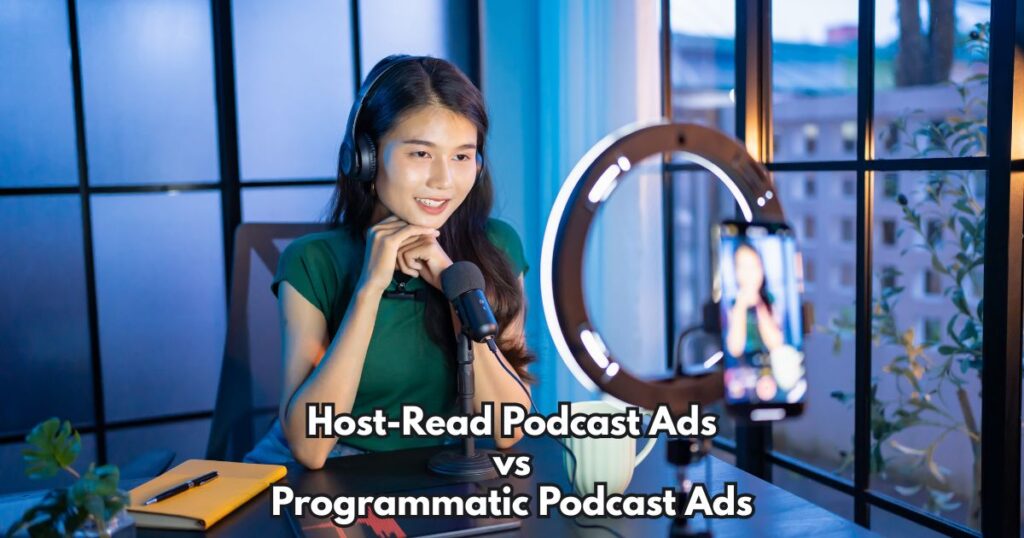
The most common formats are host-read ads and pre-recorded ads. Host-read ads are delivered by the podcast host, often using brand-approved talking points. They work well when the product needs trust, explanation, or a personal example.
Pre-recorded ads are produced separately and inserted into episodes. They give the brand more control over voice, music, legal approval, timing, and consistency. This format works well for brands that want the same message to run across many shows. Choosing the perfect podcast ad format depends on whether the campaign needs trust, consistent messaging, broader reach, or the flexibility to update creative over time.
Podcast advertising guidance places many pre-recorded ads around $15 to $30 CPM, while host-read sponsorships often cost around $25 to $40 CPM. The final cost depends on the show, audience quality, placement, targeting, and campaign length. The final podcast advertising cost can vary considerably depending on the show, audience size and quality, ad format, placement, targeting options, and campaign duration.
Where Podcast Ads Appear?
Podcast ads usually appear as pre-roll, mid-roll, or post-roll placements. Pre-roll ads play near the beginning of the episode. They are useful for quick awareness, but the message needs to land fast because the listener may still be settling into the show.
Mid-roll ads appear during the episode, often at a natural break. These are usually considered valuable because the listener is already engaged. If someone is 20 minutes into a podcast, they are more likely to stay with the ad.
Post-roll ads play near the end. They may be less expensive, but fewer listeners may reach that point. Still, they can work for reminders, softer CTAs, or shows with highly loyal audiences.
What Makes a Good Online Podcast Ad?
A good online podcast ad is specific, natural, and easy to remember. It does not try to include every product feature. It focuses on one problem the listener recognizes and connects that problem to one clear benefit. Learning how to create podcast ads that sound natural is especially important because listeners cannot rely on visuals, headlines, or buttons to understand and remember the message.
For example, a project management tool should not say it improves workflow efficiency. A more natural ad would say it helps teams stop chasing approvals across email, Slack, and spreadsheets. That line works because it sounds like a real workday problem.
The CTA should also match how people listen. A long URL is hard to remember when someone is driving or walking. A short promo code, vanity URL, or simple instruction to search the brand name usually works better.
How to Measure Online Podcast Advertising?
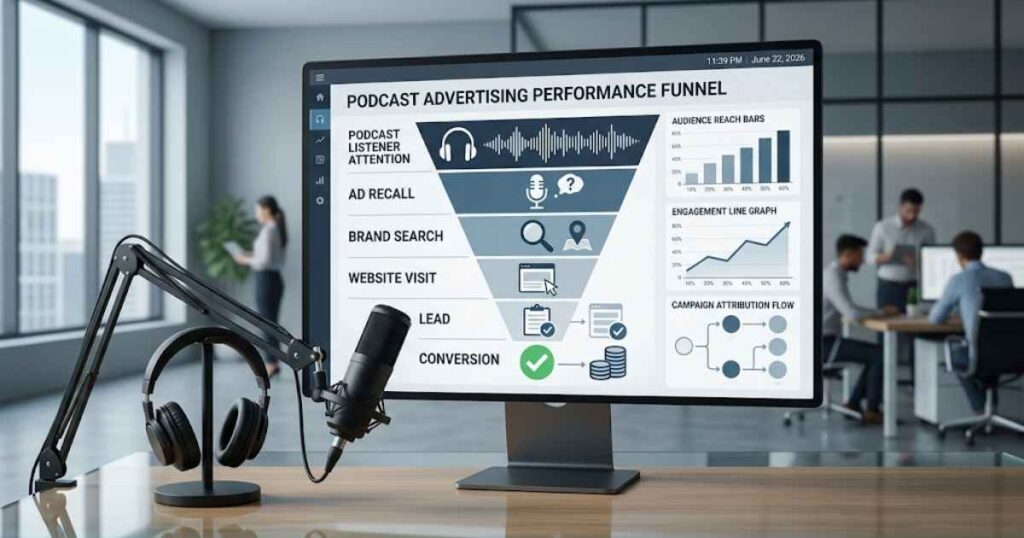
Podcast measurement is not always perfectly clean because listeners do not always act immediately. Someone may hear an ad while driving, search the brand later, visit directly, or convert after hearing the message several times. That is why advertisers should use a broader set of podcast measurement metrics rather than judging campaign performance through promo-code redemptions or last-click conversions alone.
That is why brands should measure more than promo codes. Useful signals include vanity URL visits, branded search, direct traffic, landing page engagement, surveys, demo requests, purchases, customer quality, and sales team feedback.
U.S. podcast advertising revenue reached about $2.9 billion in 2025, growing 17.6 percent year over year. That growth shows brands continue to invest because podcasts can support both measurable response and long-term brand recall. Combining these signals gives marketers a more realistic way to measure podcast advertising ROI, especially when listeners hear an ad multiple times or convert days after the original exposure.
Real World Example of Online Podcast Advertising
AG1, formerly known as Athletic Greens, is a strong example of how online podcast advertising can help a brand build trust over time. The company did not rely only on short, generic audio ads. It worked with podcast hosts and creators whose audiences were already interested in wellness, fitness, productivity, business, and personal performance.
This audience fit made the ads feel more natural. A listener hearing a trusted host talk about a daily health routine is more likely to understand the product than someone seeing a quick display ad. The podcast format gave AG1 room to explain the habit, the use case, and the reason someone might try it.
Marketing Brew reported that AG1 treated podcast advertising as a long-term strategy. The brand used both baked-in and dynamically inserted ads, and it worked with shows such as Pod Save America. The company also watched for signs of audience saturation. When performance started to level off, it would adjust cadence or creative instead of repeating the same message endlessly.
The lesson for online podcast advertising is clear. Podcast ads work better when the brand chooses shows where the audience already has a reason to care. AG1 used podcast advertising not just to create quick clicks, but to build repeated familiarity through trusted voices. That is often where podcast advertising becomes most valuable.
Final Thoughts
Online podcast advertising works because it reaches people inside a listening habit they already value. That gives brands a strong opening, but it does not guarantee attention. The ad still needs to feel relevant, useful, and easy to remember.
The strongest campaigns usually have a simple shape. The right audience hears the right message in the right show, and the next step feels clear. When those pieces work together, podcast advertising becomes more than audio inventory. It becomes a practical way to build trust, recall, and demand over time.
FAQs About Online Podcast Advertising
How do you measure online podcast advertising performance?
Performance can be measured through promo codes, vanity URLs, landing page visits, branded search, direct traffic, surveys, demo requests, purchases, and sales feedback. Since listeners may act later, brands should track both direct response and long-term brand awareness signals.
Are host-read podcast ads better than pre-recorded ads?
Host-read ads are usually better when the product needs trust, explanation, or a personal recommendation. Pre-recorded ads work better when a brand needs consistent messaging, faster production, and scale across many podcasts.
Where do online podcast ads appear in an episode?
Online podcast ads usually appear as pre-roll, mid-roll, or post-roll placements. Pre-roll ads play near the beginning, mid-roll ads play during the episode, and post-roll ads play near the end. Mid-roll ads often perform well because listeners are already engaged.
What makes an online podcast ad effective?
A strong online podcast ad focuses on one clear listener problem and explains the benefit in simple language. It should sound natural, fit the tone of the show, mention the brand clearly, and give listeners an easy next step.
Can small businesses use online podcast advertising?
Yes, small businesses can use online podcast advertising by starting with niche shows or self-serve audio platforms. A smaller podcast with the right audience can sometimes perform better than a large show with broad but less relevant listeners.
How long should an online podcast ad be?
Most online podcast ads are 30 to 60 seconds long. A 30 second ad is usually enough for a simple offer, while a 60 second ad works better when the product needs more explanation, storytelling, or a host’s personal experience.